
MATERIALS · 6 min read
Concrete Blocks in Oman: Hollow vs Solid, Sizes and Uses
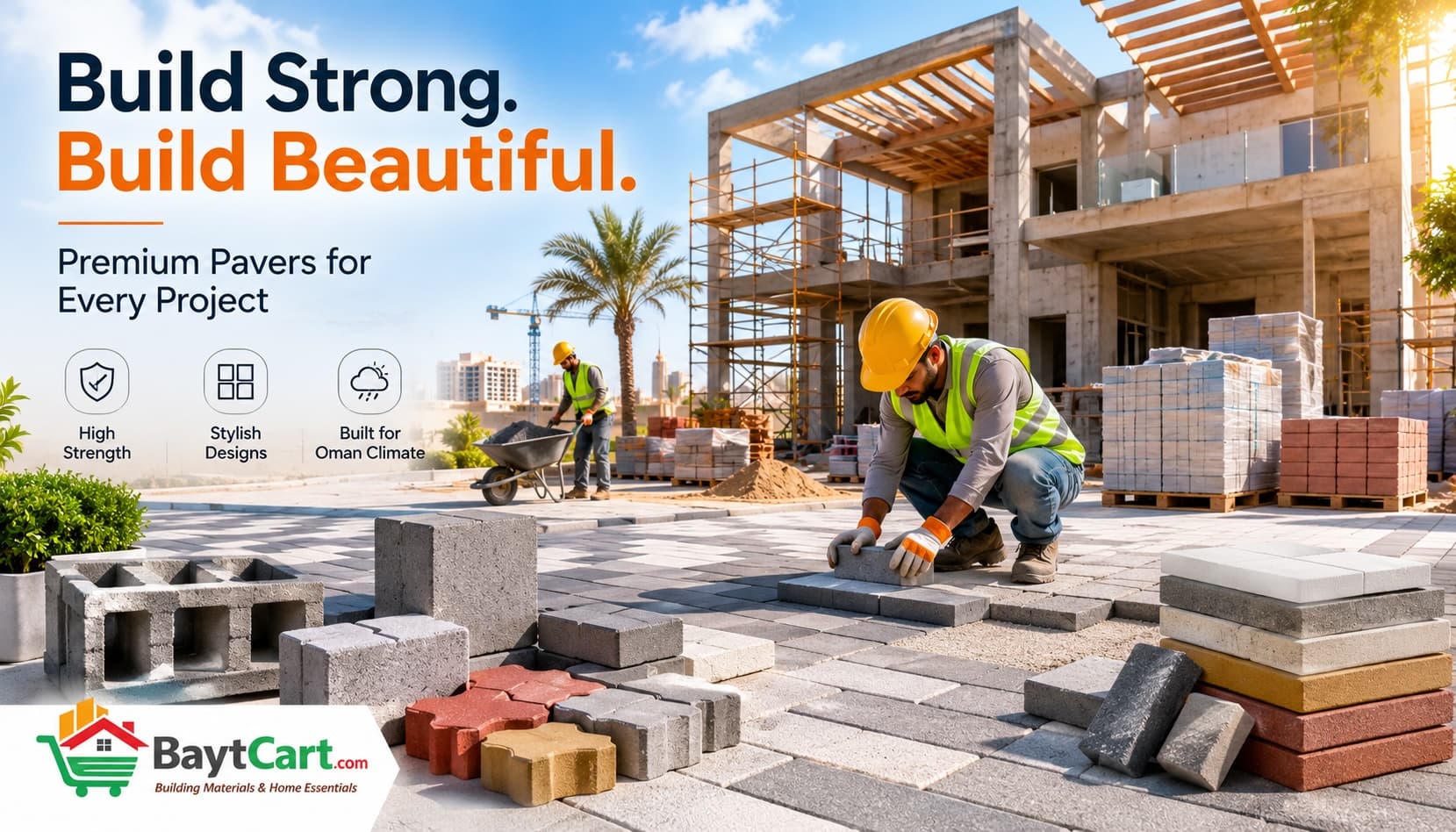
Almost every building in Oman goes up in concrete blocks. They are quick to lay, made locally, and handle the climate well. But blocks are not all the same: the width, whether they are hollow or solid, and the strength class all depend on where the wall sits and what it carries.
Block sizes in Oman
Blocks are usually named by their width in inches. The face is typically 400 × 200 mm, so you get about 12.5 blocks per square metre of wall regardless of width.
- 4 inch (100 mm): internal partitions and light non-load-bearing walls
- 6 inch (150 mm): internal walls, parapets and some boundary walls
- 8 inch (200 mm): external walls, ground-floor walls and boundary walls
Hollow or solid?
Hollow blocks are lighter, cheaper per square metre and faster to lay, and their cores can be filled with concrete and steel where extra strength is needed. They are the standard choice for most walls above the foundation.
Solid blocks are heavier and stronger. Use them below ground level, in foundations and plinths, for the first courses of boundary walls, and anywhere the engineer specifies load-bearing masonry.
Insulated blocks for cooler homes
Insulated (thermal) blocks have a polystyrene core that slows heat moving through the wall. On sun-facing external walls they can noticeably reduce air-conditioning load through the long summer. They cost more per block, so many builders use them only on the hottest elevations.
Ordering and site tips
Calculate wall area (length × height) minus doors and windows, multiply by 12.5 and add about 5% for breakage. Store blocks on pallets off the ground, keep them dry before laying, and wet them lightly in hot weather so they do not suck the water out of the mortar.